
The Seven Days of Drawing
This week, in Zach Lieberman’s Drawing++ class at the MIT Media Lab, our assignment was to do seven days of drawing. The days were as follows:
(1) Make the smallest and largest drawing you possibly can.
(2) Create a unique instrument for making a drawing
(3) Make a drawing come to life
(4) Make a collaborative drawing with someone else
(5) Do a memory drawing
(6) Make a detailed drawing of your computer, can be realistic or imaginary
(7) Make a drawing about drawing
These drawings are supposed to be scrappy, unfinished things, so with that in mind, I dove in head first.
Make the smallest and largest drawing you possibly can.
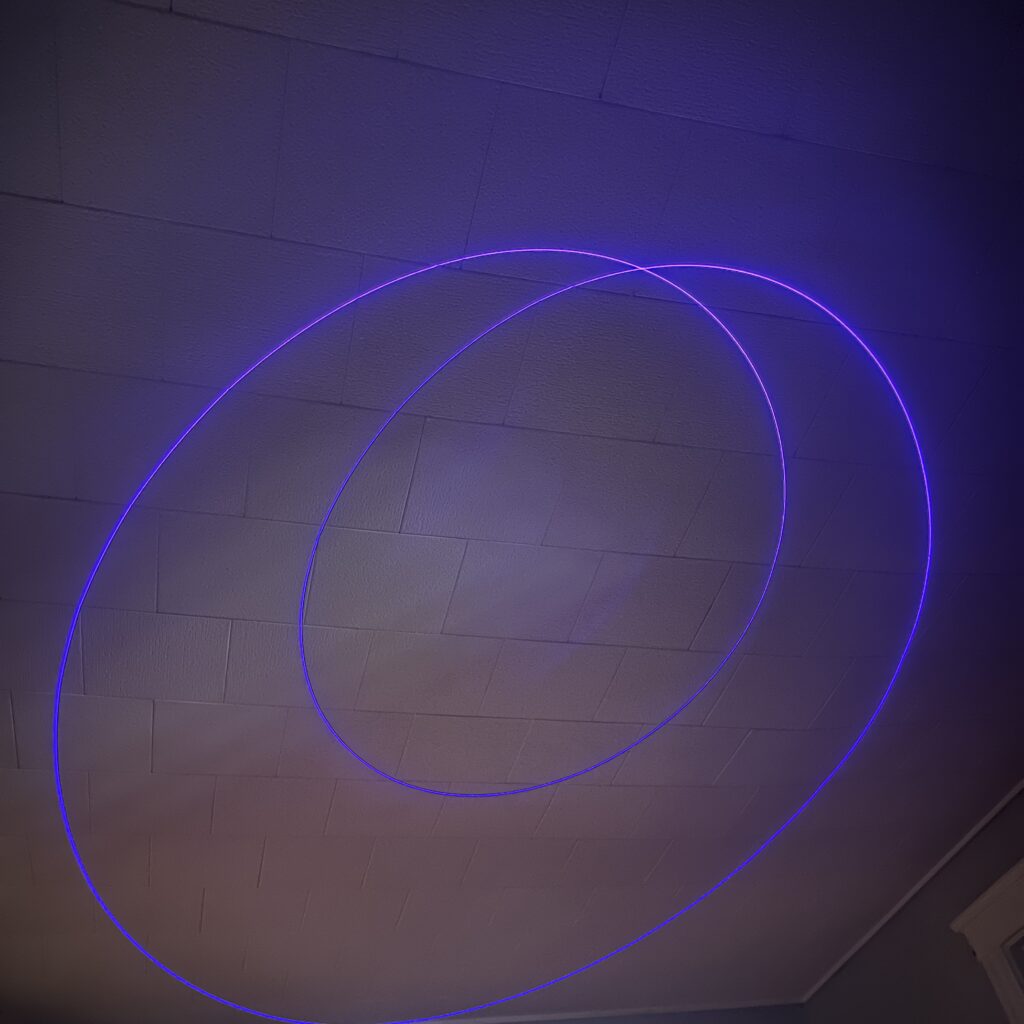
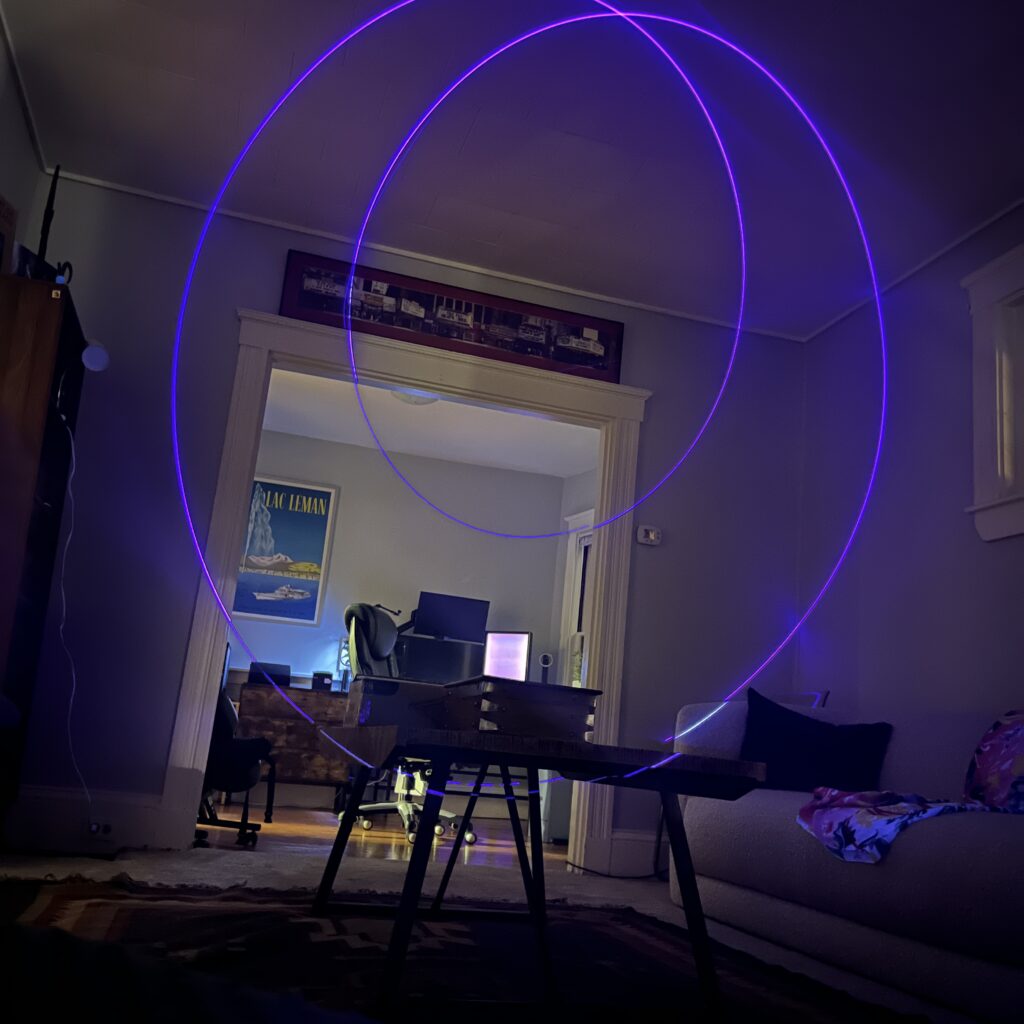
The largest drawing was the simpler one for me. For other projects of mine, such as Lightsail, I had put together a laser galvanometer. Laser galvos are well suited for making giant-scale drawings as they can make a drawing as far away as a laser can point, and scale linearly with distance. Laser galvos work by rapidly redirecting a laser beam with a set of mirrors so quickly that the motion of the laser blurs into a continuous line rather than a rapidly moving point.
My original dream was to create a giant five or ten story drawing against a large building, but I realized pretty quickly that I had no way to guarantee that no one would accidentally be struck by the galvo, potentially damaging their eyes. With this in mind, I made the largest drawing I could within my own apartment, capping out at approximately 12 meters by six meters.
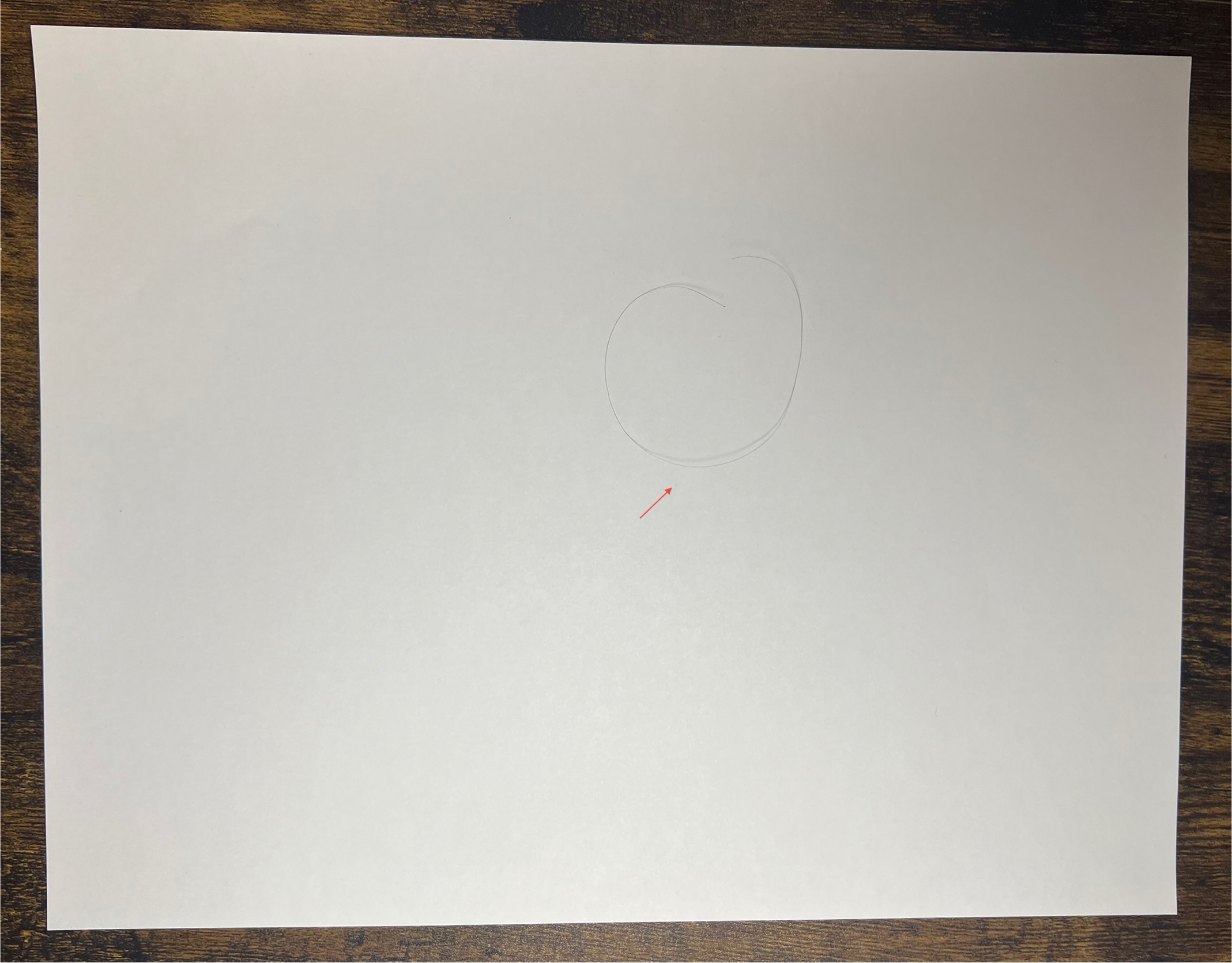
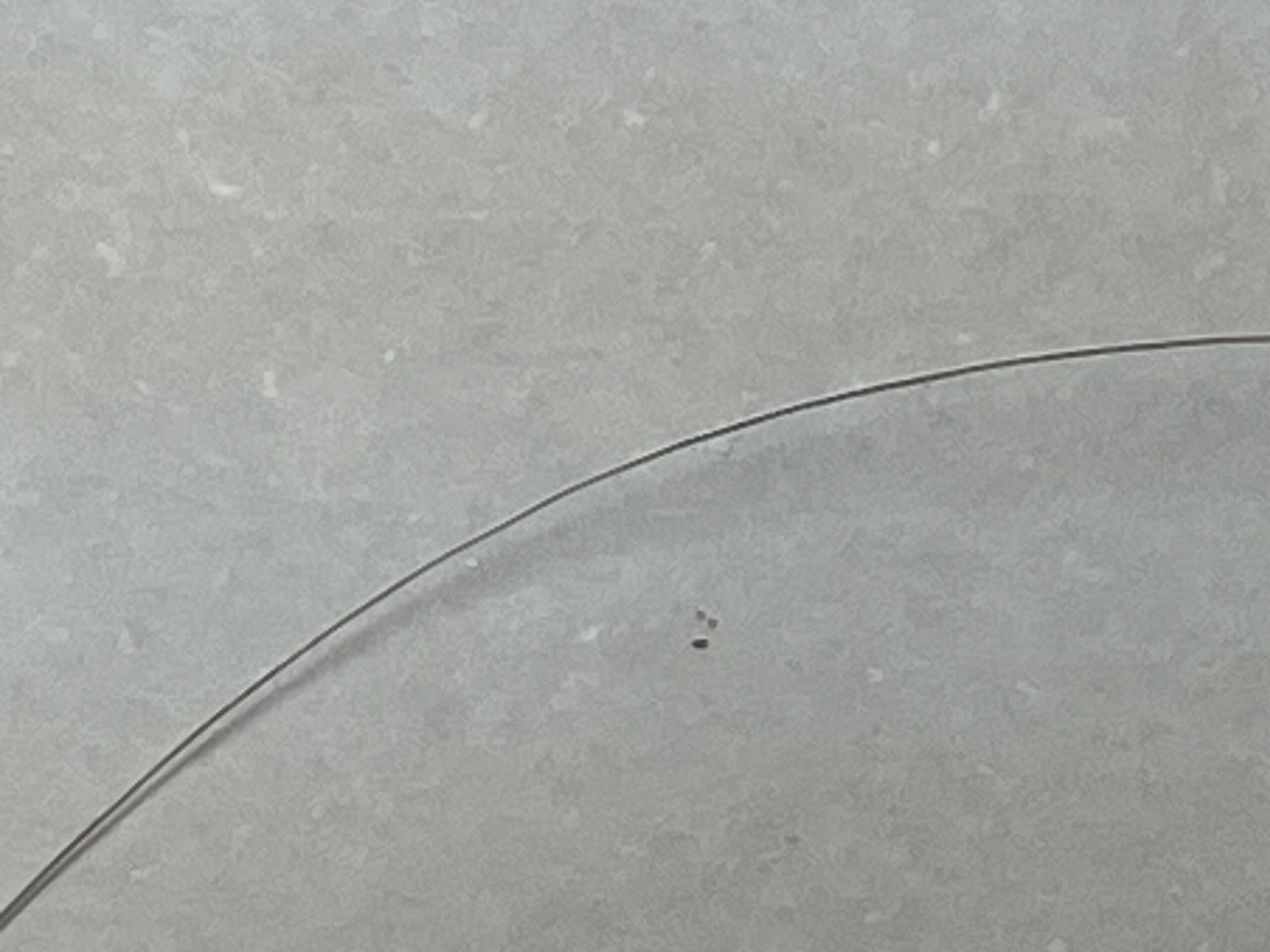
For my smallest drawing, I couldn’t think of anything particularly clever, so simply decided to see how small I could get by hand with ink. I have a large bottle of Speedball ink hanging around for another ongoing project, and while I don’t have any super fine-tipped brushes or pens, what I do have is hair. It’s surprisingly painful to yank out a strand of hair, especially when you’re anticipating it. I was trying to draw a smiley face, but I feel like the :/ face that I managed is altogether representative of how I feel about my approach on this one. The drawing is about 0.3 mm across, pictured for scale with the utilized hair strand.
Create a unique instrument for making a drawing
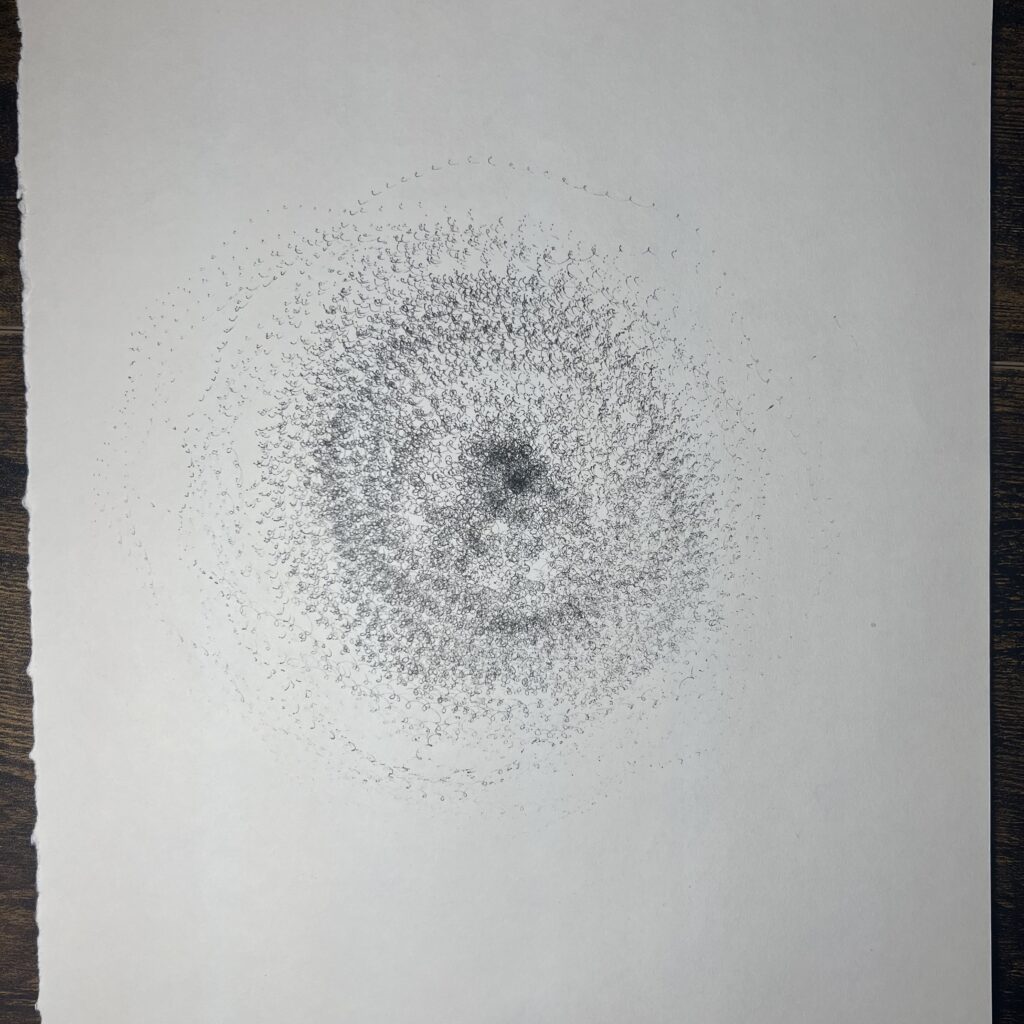
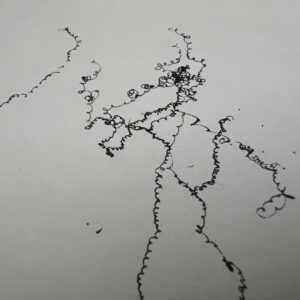
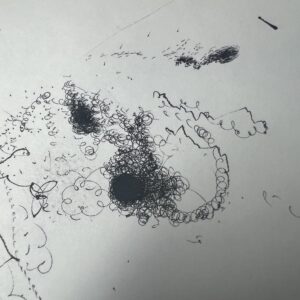
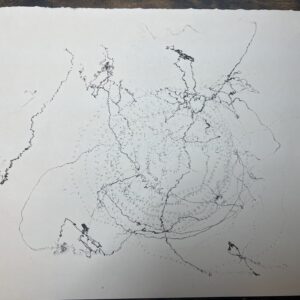
I had fun with this one. I attached yarn to the end of my electric mixer, and then attached a variety of pens to the other end, and just experimented. I have a few favorites, but really what I found most wonderful was the sheer variety of output I could produce through such a basic setup.
Here it is when held freehand:
Here it is when stabilized from above on a tripod:
This stabilized setup eventually led to this drawing:
Here are a few of my other favorites!
Make a drawing come to life
My idea for this one was to make a little person, give them a wand and the ability to cast a spell and then let them cast whatever spell they choose! In this case, giving the little person the ability to cast a spell looked like putting a little dot of ink at the end of their wand.
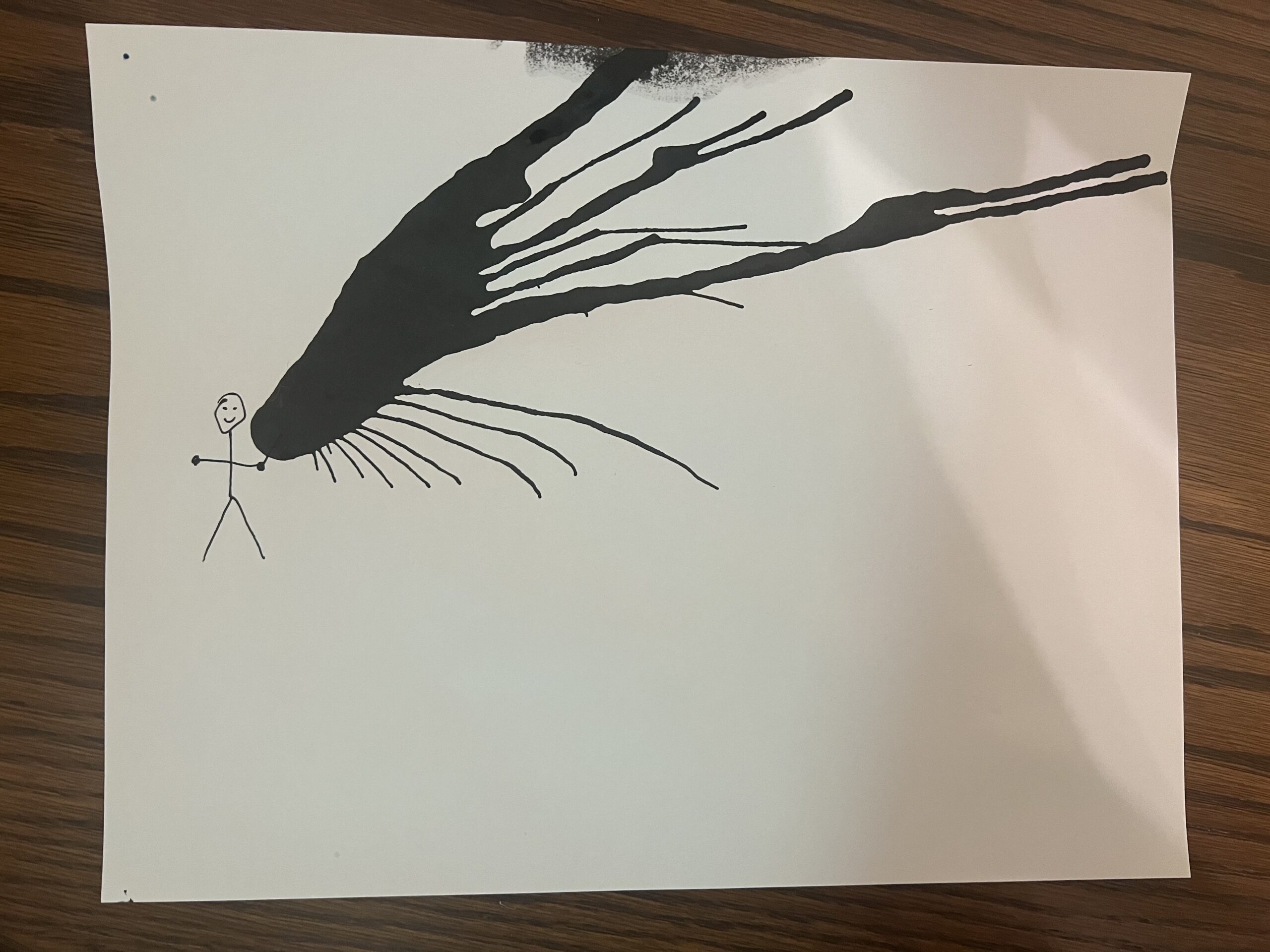
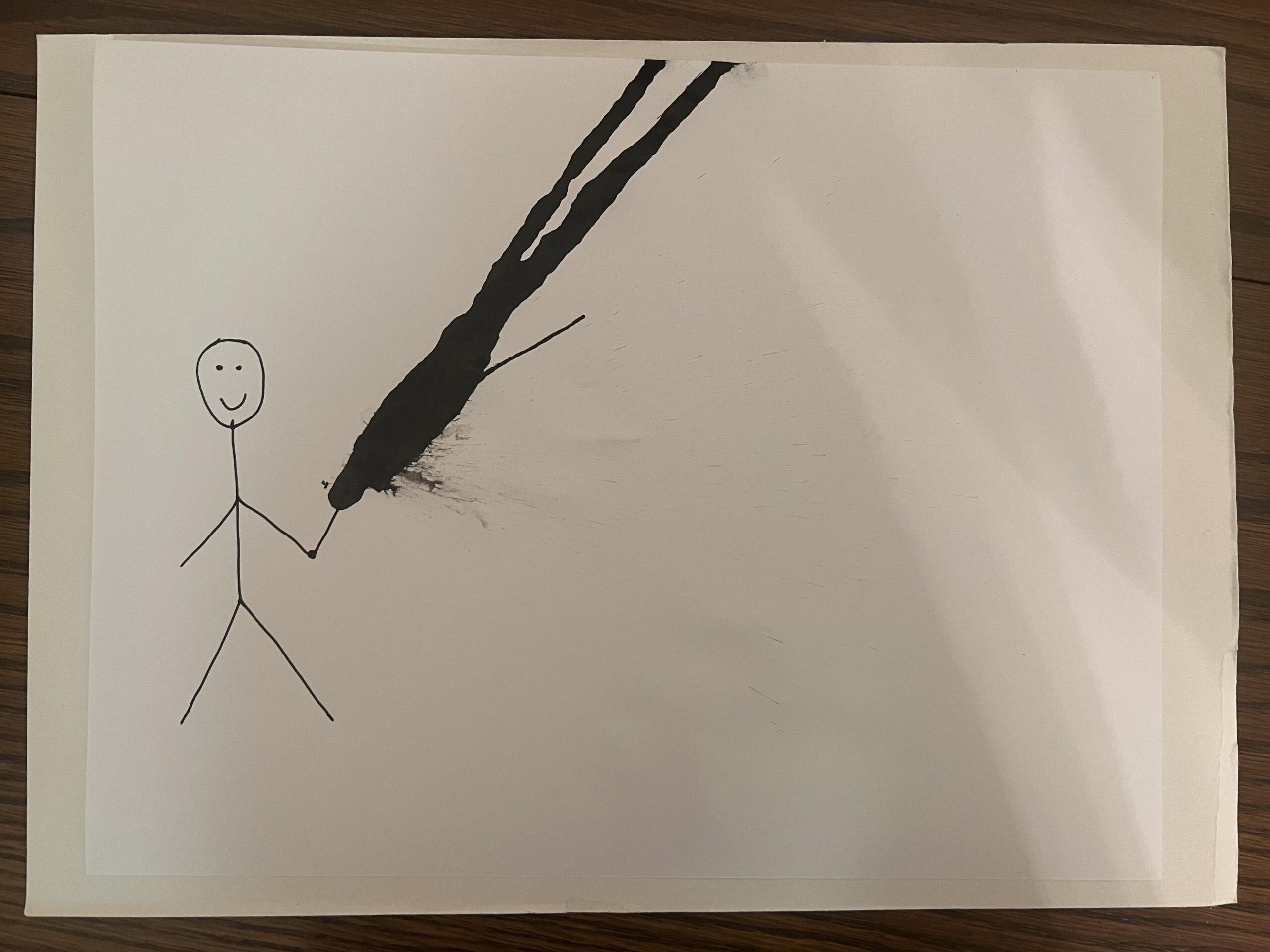
Make a collaborative drawing with someone else
Though it is a slight willful reinterpretation of the prompt, my best and longest ongoing project to date made for too wonderful a connection here for me to ignore it. I have been building my Collaborative Drawing Machine since the start of 2024, with the goal of being able to create truly collaborative physical drawings with a machine. Though the piece is generally a collaboration between another person and a machine, when I use it, it’s more of a collaboration between coding me and artist me.
Do a memory drawing
This one I also took quite literally. I was out of town in Pittsburgh over this weekend, and when I was driving back to the airport to come back to Boston there was an incredibly violent downpour. For the uninitiated, this is a classic Pittsburgh Monsoon, it felt like the city was saying goodbye. I intended to get some work done on this assignment during my flight, and when I read this prompt, I realized that I had a very vivid memory of how the water was sheeting down on the windshield when the storm was at its worst, so I decided to try to draw it from memory.
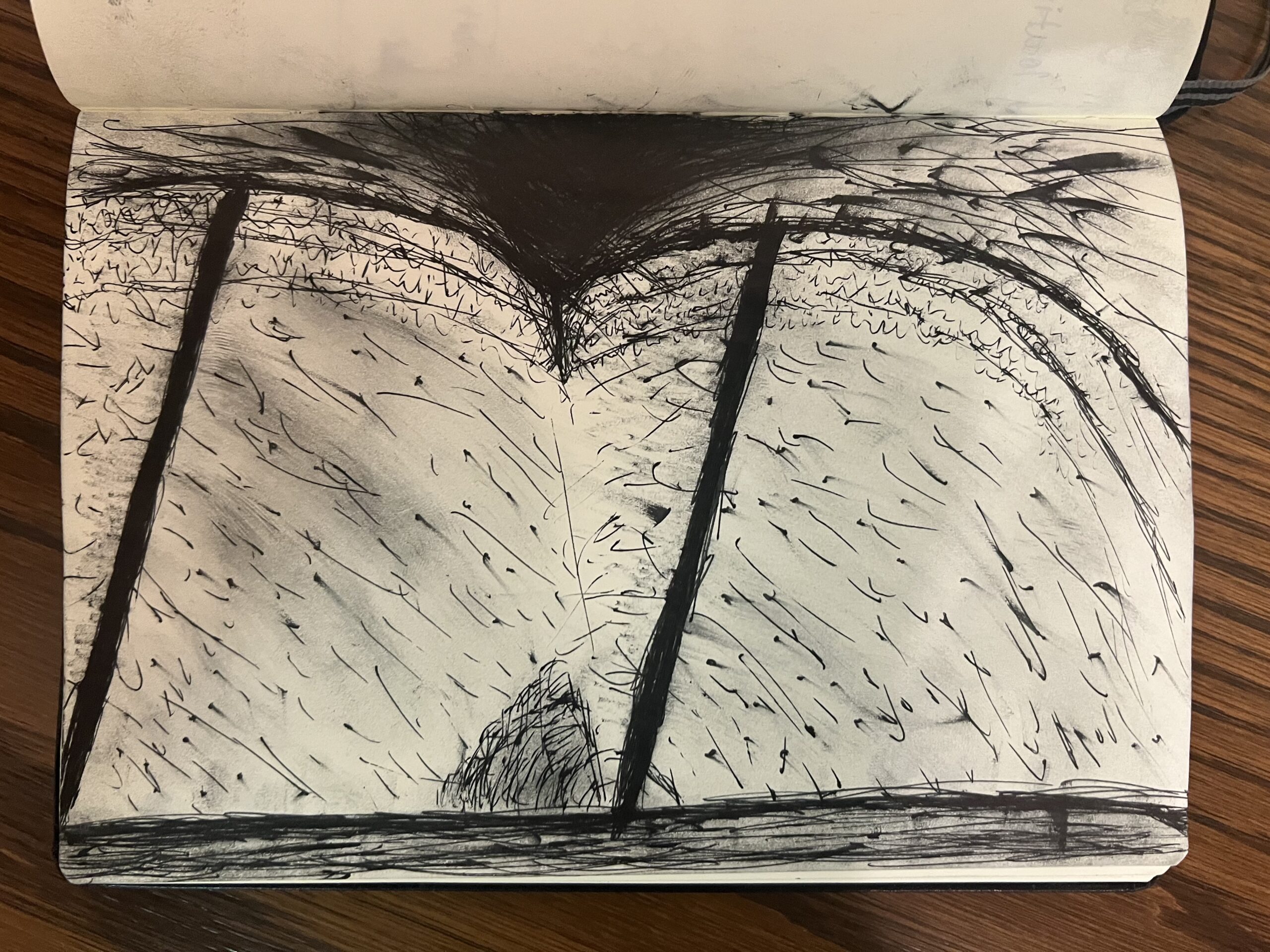
Make a detailed drawing of your computer, can be realistic or imaginary
When I think “detailed”, I think “can’t do it by hand”. I know that this isn’t strictly true, and I should explore hand-detailed pieces more, but in the context of creating an interesting prompt, I felt like exploring this one computationally could be fun. I’ve worked with edge detection algorithms plus pen plotters before, after all, the two technologies clearly complement one another. Edge detection has always provided a seeming hyper-precision to the images that they render, as every line is in perfect focus. To make this something new for me, I stuffed two pens into the plotter, with one slightly (like a quarter millimeter) higher than the other, so that while one pen would pick up every mark that was made, the other pen would only pick up certain marks (often when the pen is first placed down, or on particularly long strokes).
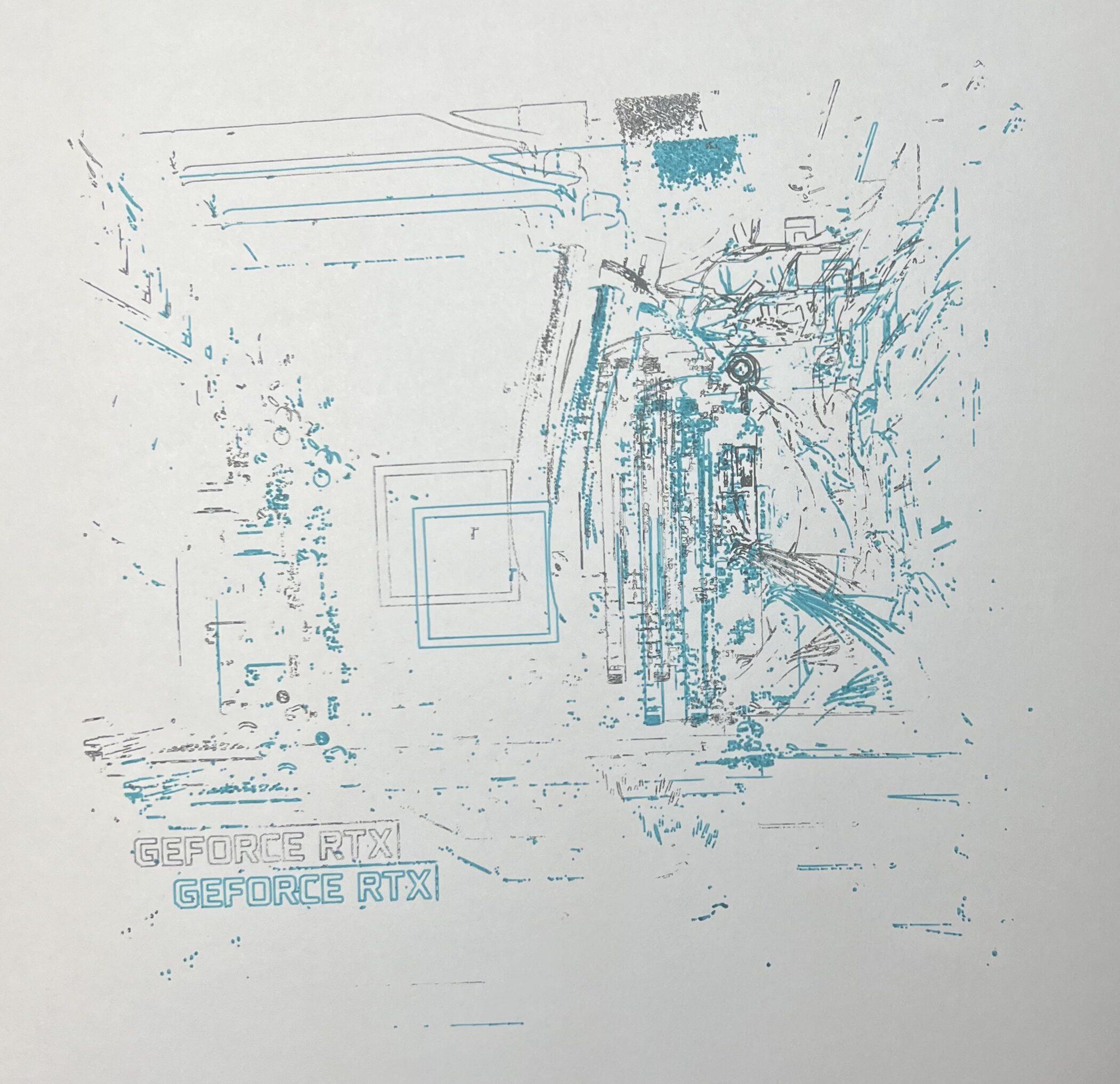
Make a drawing about drawing
I went down a whole philosophical rabbit hole on this one but ultimately ended up bringing it back to reality. I recently learned about pantographs and I love them as a form of replication. I wanted to create something similar, where the act of making a drawing makes a second drawing and I ended up with what you see. I wanted something that would apply some sort of transformation to the original image (just as pantographs can with position, scale, and in some cases rotation), but I also wanted to take advantage of the incredible consistency of the axidraw in applying more “chaotic” transformations. Thanks to the consistency of pen plotters, you can see the deterministic behavior of such supposedly chaotic transformations, kind of letting you peek behind the curtains of the seemingly random nature of chaos. Plus, it made a nice little moire pattern which is always fun!
All done!
And with that my seven days of drawing are at an end! In hindsight, I feel like the best part of this exercise was that it forced me to just go. I didn’t have time to agonize over details, in either my pieces or my documentation. As a result, while none of my drawings are perfect, it got me to put pen to paper and I felt a bit more open minded about making things even when they don’t quite hit my normal standards. Making this “smaller works” section of my website is partially inspired by this mentality shift, and it’s my way to externalize and act upon this shift!